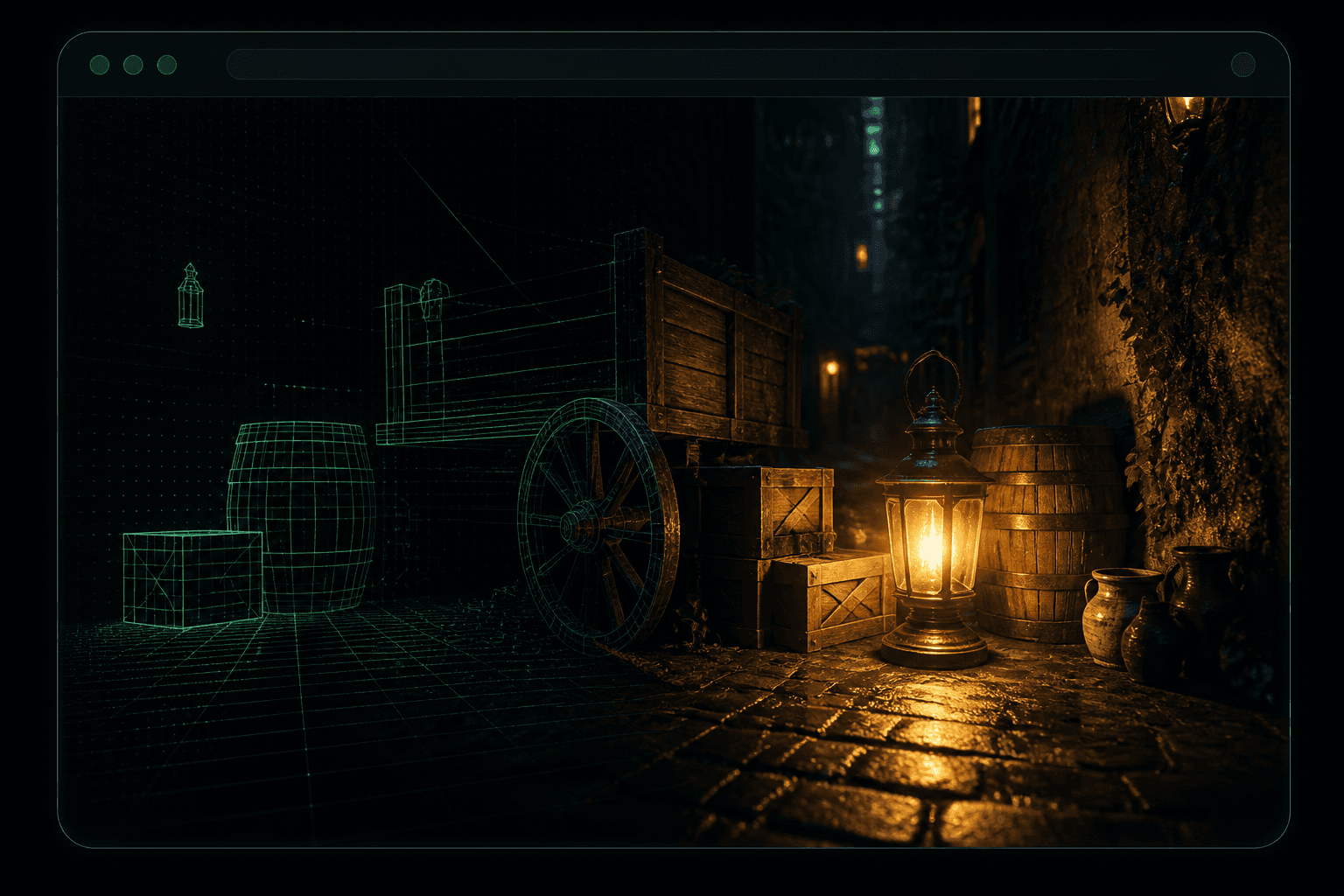

Text to 3D — realtime 3D generation engine, about a minute in the browser
One line of description yields a finished 3D asset — lighting, textures, and cinematic framing included — in about a minute, right in the browser. No mesh library, no downloads, no manual modeling. An LLM writes materials, lathe profiles, building macros, and even camera composition as a compact JSON DSL; every spec passes schema validation with auto-repair, then Three.js assembles PBR materials, seamless procedural textures, and lights. A VLM art director scores each render and rewrites the spec, raising quality every pass. One click exports a GLB with lights included, ready for Blender, Unity, Unreal, or three.js. 60 FPS even on the largest 117-part scene — every number here was measured on the running engine.
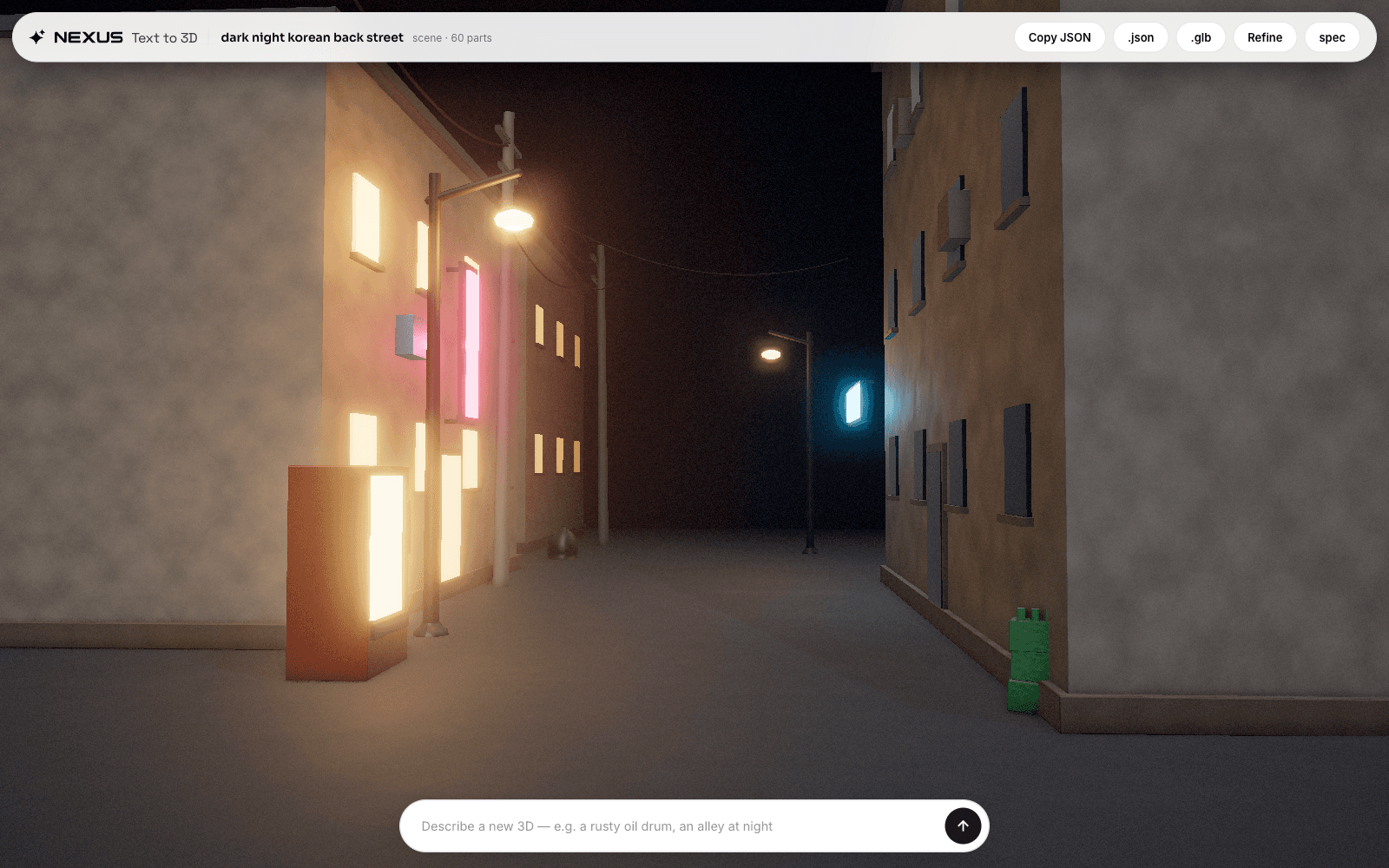
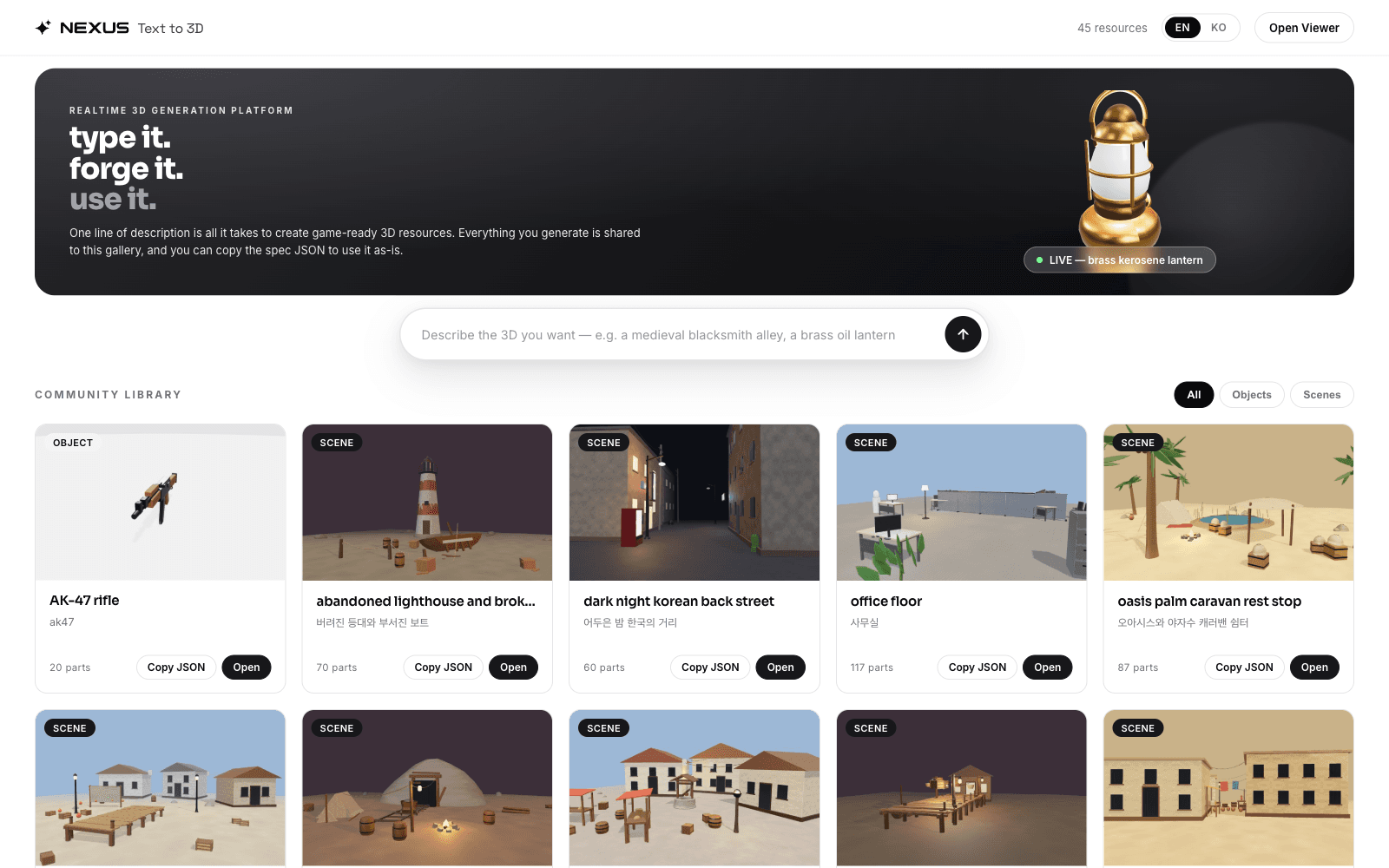
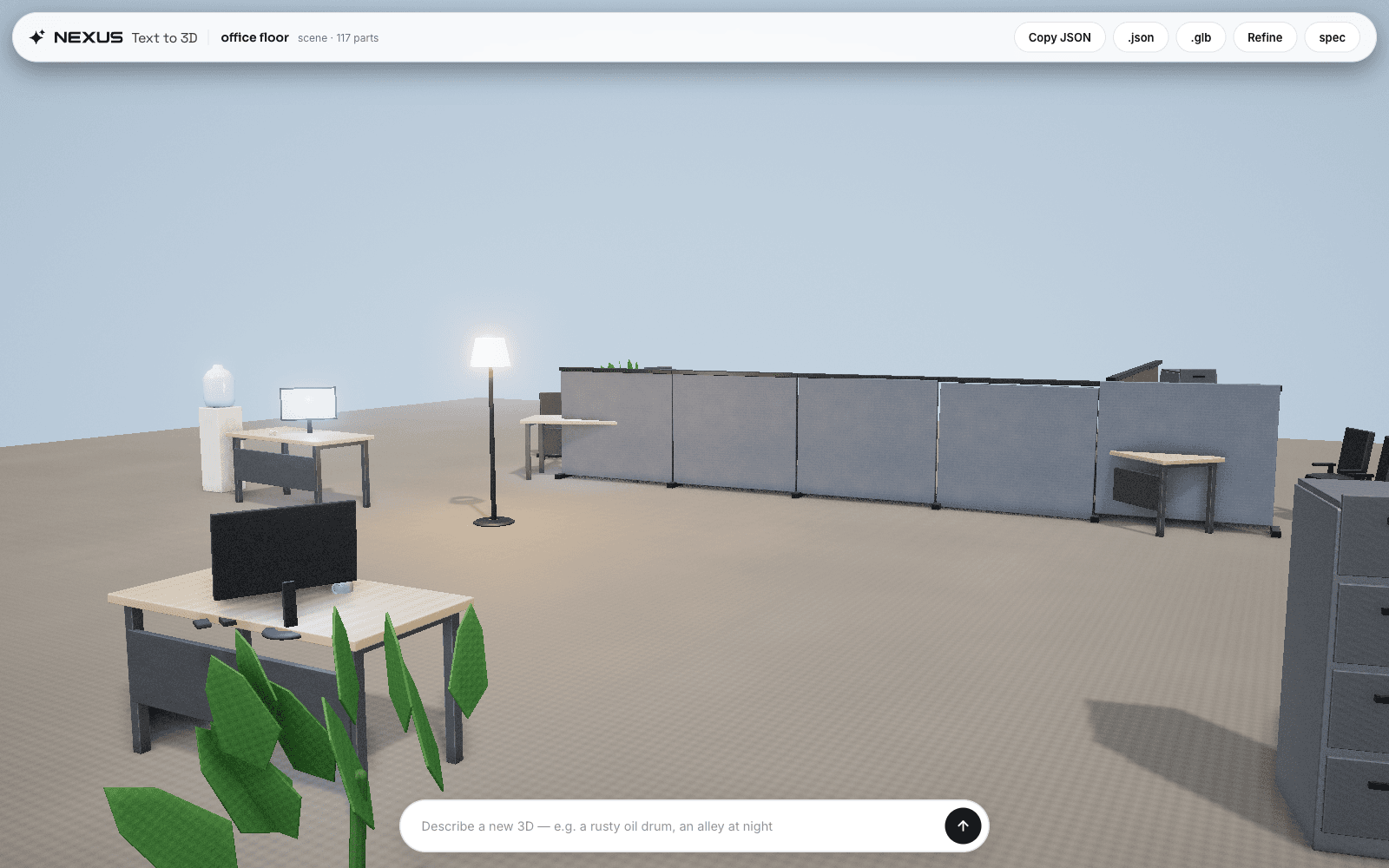
Key features
- Self-correcting 5-stage pipeline — prompt → LLM parametric spec → validate + auto-repair → procedural build → VLM refinement
- Assets are data — 4.7 KB average JSON spec: diff, version, copy, remix
- 117-part scene at 60 FPS + 145 ms GLB export — straight into Blender · Unity · Unreal · three.js
- 0 eval — 100% schema-validated JSON DSL; LLM output never runs as code
- Objects avg 56 s · scenes avg 102 s — measured across all 46 library assets
Why It Stands Out
Zero-Asset Procedural
No mesh repository, no asset store. Geometry, textures, and lighting are all generated from parameters, so every asset is original — and at ~4.7 KB of JSON each, assets can be diffed, versioned, copied, and remixed from the gallery.
A Loop That Improves Itself
Every spec passes schema validation, and violations go back to the model for repair. A VLM art director scores each render and rewrites the spec — with measured score gains of 4→5 per pass on test scenes.
Measured, Not Promised
60 FPS on the largest 117-part scene with the full post stack (GTAO · Bloom · Grade) on — 256,683 triangles per frame. Objects average 56 s, scenes 102 s, measured across all 46 library assets.
Straight Into Game Engines
One click exports binary glTF (GLB): procedural textures embedded as PNG, lights as KHR_lights_punctual. 145 ms and 3.2 MB for the largest scene — ready for Blender, Unity, Unreal, and three.js.